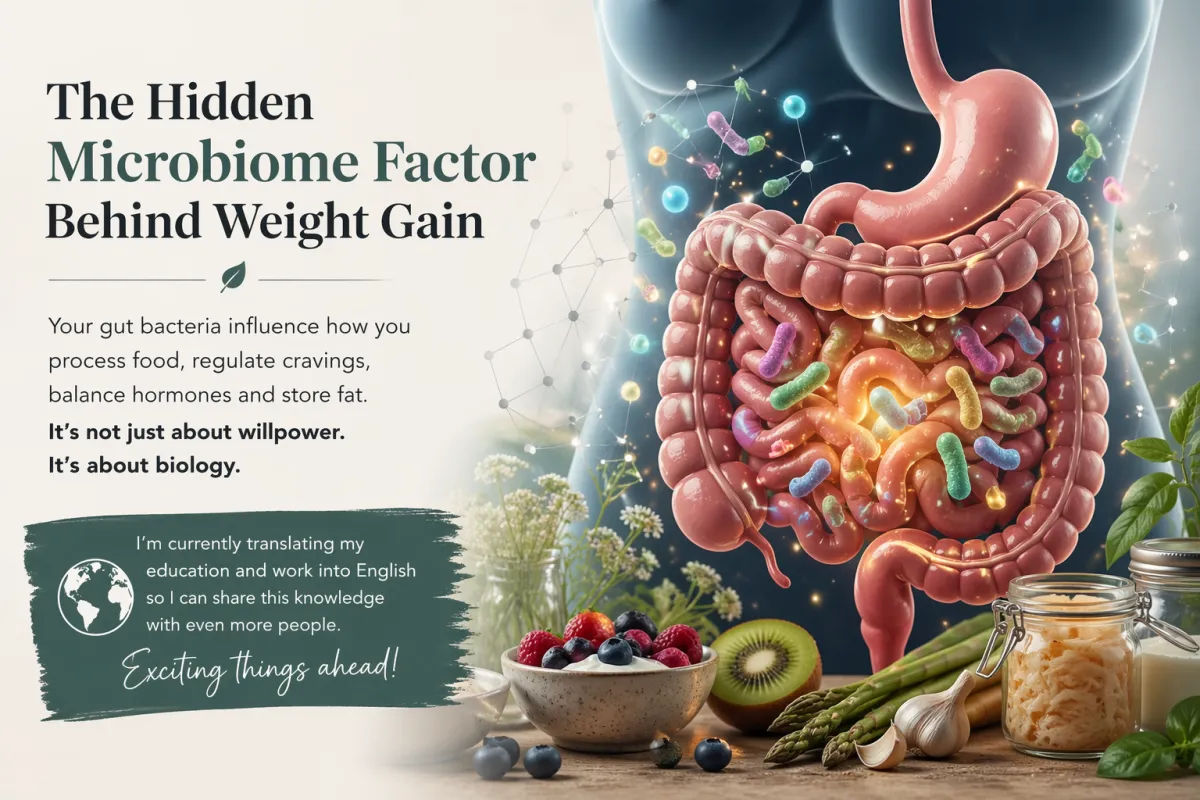
The Hidden Microbiome Factor Behind Weight Gain
When we talk about weight, the conversation often stops at calories, discipline, and exercise. But this perspective misses something fundamental. Your body is not just managing energy it is hosting an entire ecosystem that directly influences how that energy is used, stored, and regulated.
Your gut microbiome trillions of bacteria living in your digestive system plays a central role in shaping your metabolism. And in many cases, it may be one of the most overlooked factors behind weight struggles.
Why Some Bodies Store More Than Others
Two people can eat the same meal, yet their bodies may respond very differently. One of the key reasons lies in their gut bacteria.
Certain microbial patterns are more efficient at extracting energy from food. This means that some individuals literally harvest more calories from the same plate without eating more. A microbiome dominated by bacteria that favor energy extraction and fat storage can create a biological advantage for weight gain.
This is not about lack of willpower. It is about how the system is wired.
Your Cravings Might Not Be Yours
The microbiome does not just influence digestion it communicates with your brain.
Specific bacteria can affect neurotransmitters and signaling pathways related to hunger, reward, and cravings. If your gut is dominated by microbes that thrive on sugar or refined carbohydrates, they may indirectly drive you to seek those foods more often.
Over time, this creates a loop:
You feed the bacteria → they grow stronger → they influence your cravings → you feed them again.
Breaking that cycle is not just mental it is biological.
Inflammation and Weight Gain: The Missing Link
An imbalanced microbiome can weaken the gut barrier, allowing inflammatory compounds to enter the bloodstream. This low-grade inflammation interferes with insulin signaling and metabolic flexibility.
In simple terms, your body becomes more likely to store fat and less able to burn it efficiently.
This is why weight gain is often not just about “too many calories,” but about a system that has shifted into a protective, storage-driven state.
The Bacteria That Support a Healthy Metabolism
Not all microbes work against you. In fact, some are essential for metabolic balance.
Beneficial bacteria produce compounds like short-chain fatty acids (SCFAs), which:
support gut integrity
reduce inflammation
improve insulin sensitivity
regulate appetite and satiety
A diverse microbiome tends to be more resilient and better at maintaining balance. It adapts more effectively, responds to change, and supports the body rather than working against it.
Why Traditional Dieting Often Falls Short
Many people focus on restriction eating less, cutting calories, pushing harder. But if the microbiome remains unchanged, the underlying drivers of weight gain often persist.
This is why so many experience temporary results followed by relapse.
True, sustainable change requires working with the body not against it. And that starts in the gut.
A More Intelligent Approach to Weight
Supporting your microbiome is not about perfection. It is about creating the right conditions for balance:
increasing fiber diversity to nourish beneficial bacteria
reducing ultra-processed foods that disrupt microbial balance
supporting digestion and nutrient absorption
addressing stress and sleep, which directly impact the gut–brain axis
When the internal environment shifts, the external results begin to follow.
A Personal Note
This deeper understanding of the gut, metabolism, and human physiology is exactly what has shaped my work and why I am so passionate about sharing it in a way that is both practical and grounded in real biology.
Right now, I am in the process of translating my education and work into English, so I can make this knowledge more accessible internationally. It is an exciting step, and one that will allow me to support more people in understanding what is really going on beneath the surface of their health.
Because when you begin to understand your body at this level, everything changes.


